Why did the protoss cut their nerve cords?
Scope: The original StarCraft manual, Legacy of the Void’s campaign and epilogue, and the official short story One People, One Purpose.
Spoilers Spoilers for Legacy of the Void’s main campaign ending and epilogue, plus the aftermath in One People, One Purpose.
The Keystone activates. Selendis comes back to herself. Then Artanis tells her to cut off her nerve cords. If Amon has already been pulled out, why is another sacrifice necessary?
Because the opening is temporary. Amon has used the Khala to possess its members, and they must disconnect before he can reclaim them. The nerve cords are the physical connection; the Khala is the shared psionic bond. Cutting the former breaks access to the latter.
That distinction explains how the escape works. It does not yet explain why it costs the protoss so much.
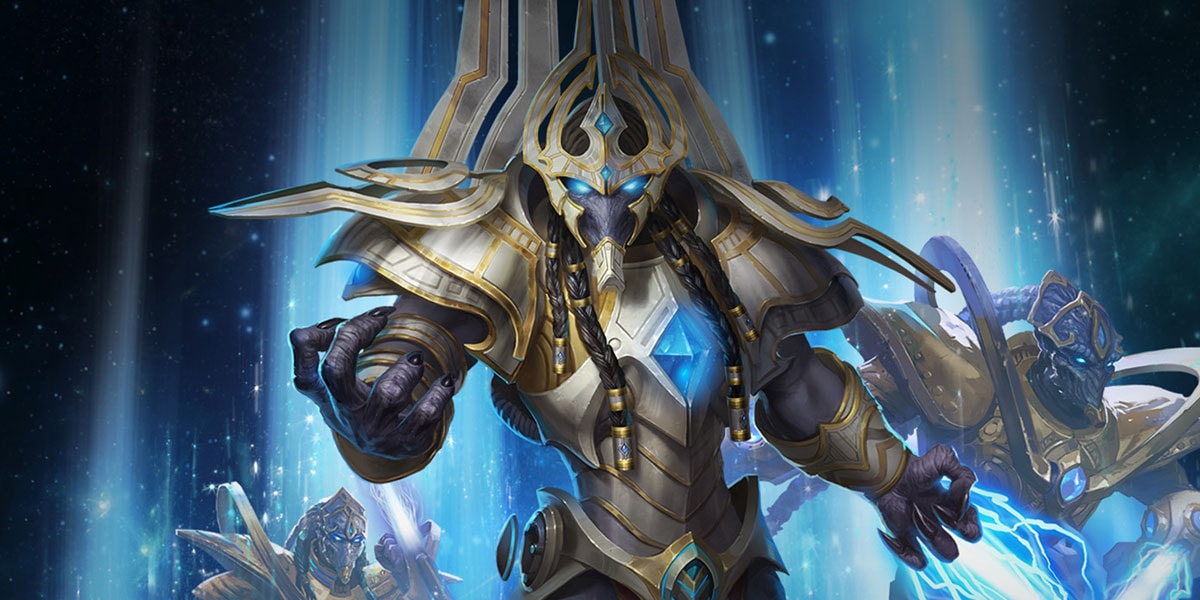 Official promotional art showing Artanis with intact nerve cords, not a scene from the postwar short story. © Blizzard Entertainment. Image source ↗
The Keystone gives them a chance to act
In the main campaign’s ending cinematic, Amon is still resisting after the artifact draws him out. Artanis urges Selendis and the templar to sever their cords while they can choose for themselves. Her hesitation comes before the escape is secure.
The order of events matters. The artifact interrupts Amon’s hold; the templar then remove the connection he could use to take them back. Treating the first event as a permanent cure makes the second look pointless. Together they complete the escape.
Once the protoss disconnect, Amon is banished into the Void. That is the main campaign’s victory, not his final destruction. Blizzard’s StarCraft Story Primer places the final confrontation in the epilogue, with Kerrigan and her allies.
A bond worth keeping became a way in
The Khala was not simply an enemy control system waiting to be switched off. The original StarCraft manual describes Khas rediscovering his people’s psychic bond and teaching others to reach it. The resulting discipline helped them move beyond generations of tribal war.
For its followers, connection meant something more intimate than exchanging messages. Their society had been built around a way of sharing themselves. Losing it could therefore be necessary without feeling like an uncomplicated improvement.
In Legacy of the Void, Amon turns that connection against the Aiur protoss. The army setting out to reclaim its home becomes an army he can command. Zeratul and the Dark Templar save some of their brethren, including Artanis, though Zeratul dies in the conflict. The official story summary identifies the Khala as the route of Amon’s control.
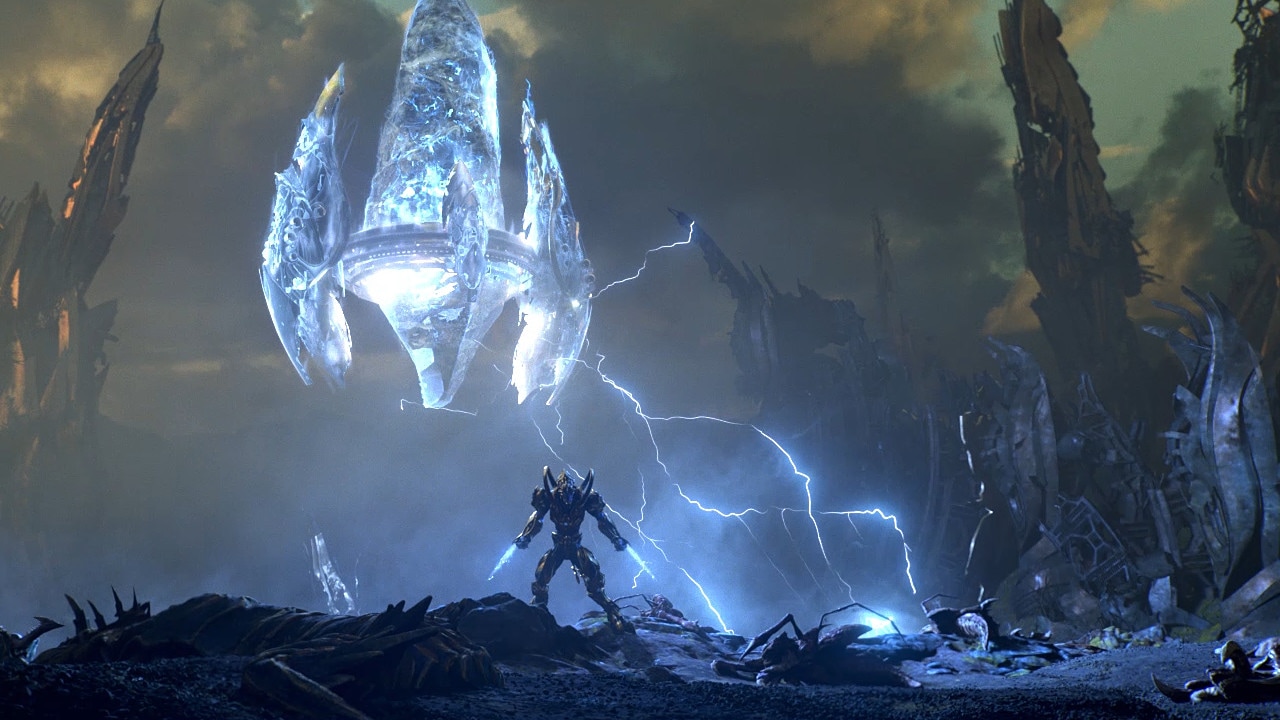 The battle for Aiur in the Legacy of the Void opening cinematic, before the severing shown in the campaign. Official still. © Blizzard Entertainment. Image source ↗
The Dark Templar had a different reason
Severing the cords was not invented for Amon’s invasion. The manual already describes dissidents who feared that the Khala’s communal order would erase their individual identities. The Dark Templar ceremonially cut their nerve appendages, separating themselves from the bond.
That earlier rejection and the later emergency should not be collapsed into one motive. The Dark Templar were resisting a social and spiritual order. The Aiur survivors faced an enemy occupying the connection itself. Nothing in the earlier account requires them to have foreseen this particular attack.
Nor does disconnection erase every psionic ability. Artanis can still communicate and fight after losing his cords. What has been removed is membership in the shared bond, not the entire range of things a protoss mind can do. Describing the procedure as losing all telepathy makes the continuing story seem contradictory for the wrong reason.
What freedom leaves behind
Blizzard’s official short story One People, One Purpose, by Alex Acks, follows Selendis after the war. She still misses the Khala’s immediate empathy. Questions and body language now have to do work that the connection once did for her. Relief from Amon and grief for the bond can coexist.
That aftermath gives the ending its weight. Artanis offers freedom from possession; he cannot promise that everyone will immediately know how to live with it. The survivors have to learn to understand one another without the assurance they once shared.
The zerg’s struggle with imposed control takes a different form. Why the Overmind created Kerrigan follows its attempt to create a way out for the Swarm, rather than sever a bond like the Khala.
Official sources
- StarCraft Story Primer ↗Part 6: Amon, the Khala, banishment and the later epilogue.
- StarCraft (1998) manual — Old Games Download archive ↗Khala and The Dark Templar, pp. 74–75 and 77 in the linked PDF; a third-party archive of the official manual.
- One People, One Purpose — Alex Acks ↗Official PDF pp. 2–3, 6–7, 32–35: empathy, disconnection and the postwar aftermath.
Further reading
- Legacy of the Void campaign ending — xLetalis gameplay recording ↗0:35–1:28 and 2:18 onward; footage of the game, not an official-channel upload.