Why did Rohana refuse to sever her nerve cords?
Scope: Legacy of the Void campaign and the official introduction to “It Will End in Fire.”
Spoilers Includes Rohana’s severing scene and subsequent conversations.
Rohana had two reasons to keep her connection to the Khala: her duty to preserve protoss memory, and the chance to learn Amon’s thoughts through the link he was using against her. Neither made her immune to his control. Her refusal becomes easier to understand when those motives are separated from the question of whether staying connected was safe.
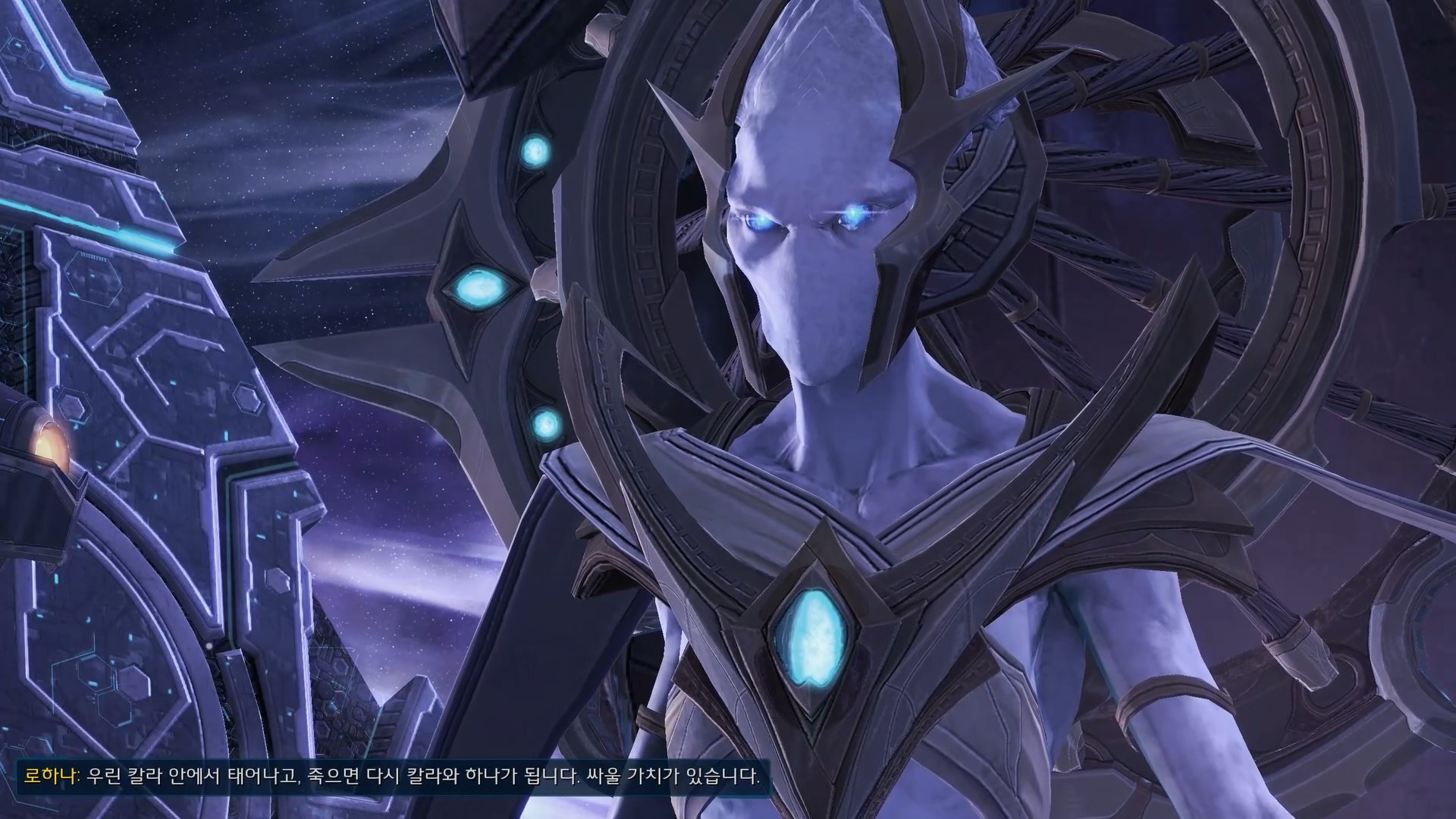 Rohana argues for keeping the Khala. Korean game screen. Game © Blizzard Entertainment. Screenshot: 옷게, unmodified. CC BY-NC-ND 4.0 terms linked below. Image source ↗
A Preserver was being asked to surrender her work
Blizzard’s short story “It Will End in Fire” establishes the Grand Preservers as custodians of the protoss’s long memory. Rohana’s relationship with the Khala therefore involved more than belonging to a familiar tradition. Preserving what it carried was her responsibility.
Artanis approaches their disagreement from an immediate danger: Amon can reach her, so she must sever her nerve cords. Rohana answers from the history of the people that connection once united. To her, the Khala is still something worth defending.
She also offers a practical reason for more time. If Amon can look into her through their connection, she can glimpse his thoughts in return. That proposal changes the argument. Keeping the link is now a gamble with a possible military benefit, as well as an attempt to retain the memories entrusted to her.
Her gamble produced information, not immunity
Late in the campaign, Amon speaks to Artanis through Rohana. After he withdraws, she reports what she has learned of his plans. Artanis acknowledges that her connection has helped them. The story gives her proposal a real result; it does not dismiss everything she did as pointless resistance.
Yet the same scene demonstrates why the arrangement cannot last. Amon has just used her as his mouthpiece. Reading something of the enemy’s intentions is not the same as having a secure connection that he cannot exploit.
Artanis accepts the value of what she learned and still tells her that the time has come to cut the link. She finally severs her nerve cords. It is a decision to surrender something valuable because keeping it carries a danger they can no longer accept.
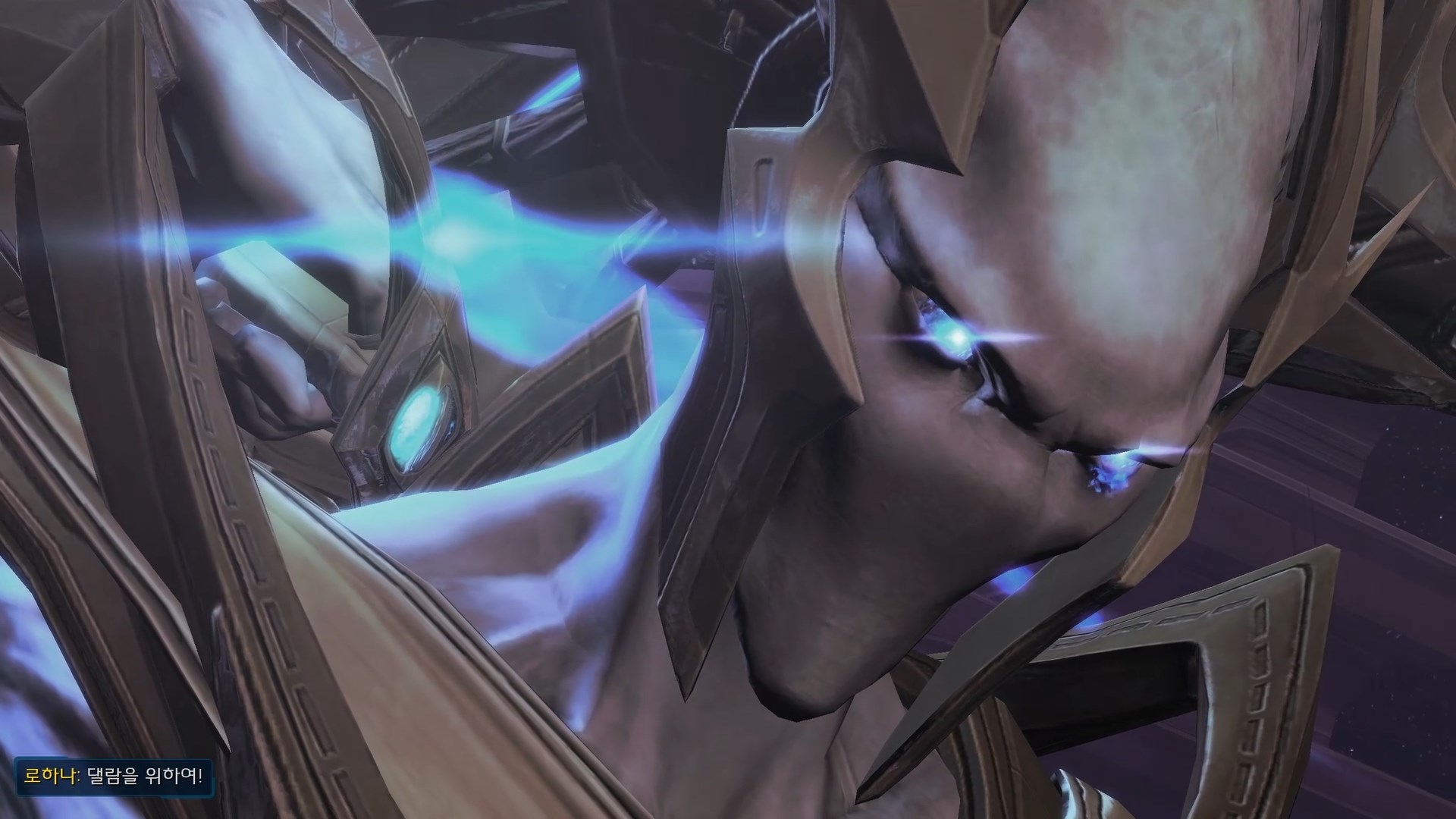 Rohana finally severs her nerve cords. Korean game screen. Game © Blizzard Entertainment. Screenshot: 옷게, unmodified. CC BY-NC-ND 4.0 terms linked below. Image source ↗
What she loses is clearer after the cut
Does severing the connection erase everything Rohana knows? Her later conversation with Artanis gives a more specific answer. She can still discuss a past event as recorded history. What she can no longer convey is its remembered joy: the emotional experience is no longer available to her in the same way.
That distinction matters. Knowing that an event happened and feeling the memory of it are different kinds of access to the past. Rohana’s account supports the loss of the latter. It does not support a claim that every historical fact has vanished from her mind.
Her hesitation can therefore be understood without declaring her choice safe or treating her as merely stubborn. The Khala was part of how she carried out her duty. After giving it up, she must speak about history with a limit she did not previously have. The conversation after the severing makes the cost visible, even though she has accepted the need to pay it.
For the broader reason severing nerve cords breaks this route of control, continue with the Khala and the protoss nerve cords.
Official sources
- Official story introduction — It Will End in Fire ↗The Grand Preservers’ role.
Further reading
- Defending the Khala — campaign dialogue ↗Rohana conversation. Korean Blizzard game frames and transcription posted by 옷게.
- Intelligence and severing — campaign scene ↗Rohana conversation. Korean Blizzard game frames and transcription posted by 옷게.
- Memory after severing — campaign dialogue ↗Rohana conversation. Korean Blizzard game frames and transcription posted by 옷게.
- Screenshot contributor’s terms — CC BY-NC-ND 4.0 ↗Applies to the contributor’s work; game rights belong to Blizzard.