Why do Terran buildings fly?
Scope: The original StarCraft manual and Terran Basics, with StarCraft II’s lift-off guide treated separately. Covers local building relocation, not every facility or interplanetary travel.
Spoilers No story-ending spoilers; this article covers building relocation and operating limits.
A Terran barracks can leave its own footprint behind. A command center can fly to another mineral field and become the hub of a new base. Why make a building movable at all?
The original StarCraft manual treats mobility as a way to keep useful infrastructure when its location stops being useful. A base can change sites without abandoning every building it has already finished. That freedom comes with a pause in the building’s work.
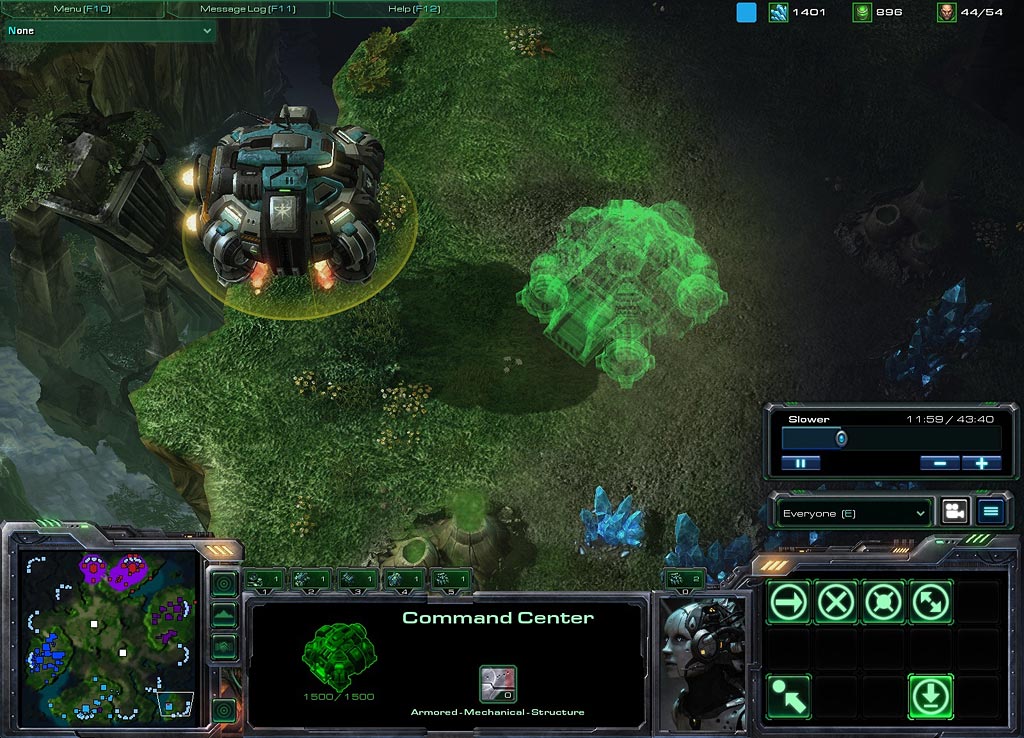 A command center approaches a new landing site near minerals. The official guide presents this as island expansion. © Blizzard Entertainment. Image source ↗
Keep the building, change the site
The manual’s Mobile Buildings section, page 34, gives primary Terran structures their own thrusters for low-altitude flight. It connects this capability to moving between resource deposits and evading an approaching attack.
A mined-out site leaves behind a command center that is still useful, but no longer has nearby resources to collect. Moving it preserves the facility while changing the work site. Blizzard’s StarCraft II lift-off guide makes this concrete: fly an idle command center to fresh resources and start another mining operation. Its island-expansion example also puts the building itself in transit.
Retreat serves the same practical purpose. Losing a position need not mean losing all the infrastructure there. Flight is an escape option, though, rather than a guarantee: the guide describes airborne buildings as slow, vulnerable and unable to fight back.
The attachment stays on the ground
This is not a whole base continuing business in the sky. In the original manual, a flying building cannot carry out its normal operations. Its add-ons stay behind and become inactive; they draw power from the primary structure they were attached to.
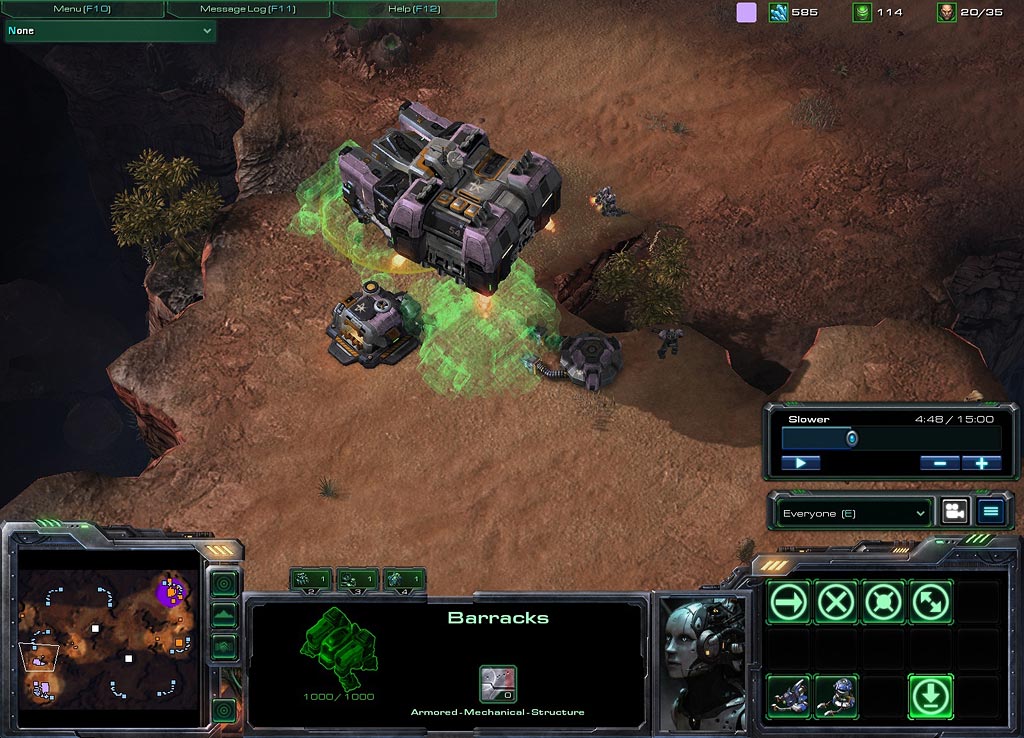 The guide’s example of a barracks and factory exchanging add-ons. The small attached facilities remain on the ground. © Blizzard Entertainment. Image source ↗
The stranded equipment is still recoverable. A compatible primary building can land beside it and put it back to use. StarCraft II makes separation useful for changing production arrangements: the official picture above illustrates a barracks and factory exchanging add-ons. Moving the parent building does not mean carrying the attachment with it.
A flight ends at a usable landing spot
The SC2 guide identifies particular flight-capable structures, including the command center, barracks, factory and starport. Landing requires clear ground. A unit blocking the site prevents touchdown; the building cannot crush it to make room. Saving a structure is only part of the relocation—the destination must let it work again.
The original manual specifies low-altitude flight, not interplanetary travel. Nor should the flight-capable list be merged across games: Blizzard’s original Terran Basics and its SC2 guide list different structures. Mobility belongs to particular facilities and versions, not automatically to everything Terrans build.
Protoss construction moves a building in a different sense. Continue with why a probe can leave before a warp-in finishes, where preparing an arrival point replaces staying on site to build.
Official sources
- Blizzard — original StarCraft manual ↗Page 34, Mobile Buildings and Support. Blizzard-authored original preserved by Team Liquid.
- Blizzard — Game Guide: Terran Lift-Off ↗Reuse Command Centers, add-on exchange, flight vulnerability and landing restrictions.
- Blizzard — original Terran Basics ↗Lifting Off, the original-game flight-capable list.