Why do overlords provide supply?
Scope: Original StarCraft Compendium and 2012 SC2 Zerg basics guide. No complete command hierarchy, exact mind count, psionic radius, immediate ferality rule or modern balance tutorial.
Spoilers No story-ending spoilers. Covers supply and the overlord’s command role.
Select an overlord in the original StarCraft and its supply panel talks about Control: control used, control provided, total control and a maximum. The unit floating above the army supplies something less tangible than a warehouse of provisions.
Overlords help direct and control other zerg. That is the role Blizzard’s original guide connects to their supply function. It is an explanation of why the unit matters to a growing army, but it leaves a tempting second question open: how much of that fictional ability can a supply number actually tell us?
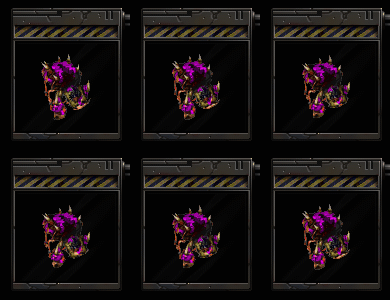 The overlord portrait from Blizzard’s original StarCraft guide. © Blizzard Entertainment. Image source ↗
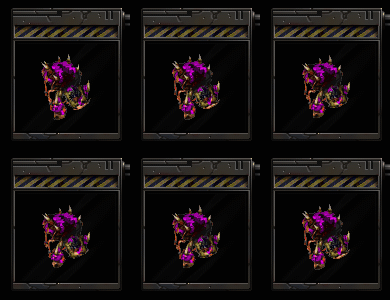
A command role inside the supply interface
The original overlord guide describes overlords as providers of control and direction. Its supply section says that producing many of them is necessary for colony growth, comparing their supply function with terran Supply Depots and protoss Pylons.
This gives the familiar mechanic a particular meaning for the zerg. A larger army needs more capacity to direct it. The guide’s explanation focuses on that command role; it does not reduce the overlord’s contribution to food carried inside its body.
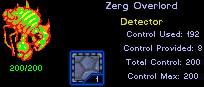 The original guide’s overlord panel lists eight control points provided. © Blizzard Entertainment. Image source ↗
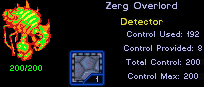
That distinction concerns what the supply limit represents. It is not a claim that zerg creatures have no nutritional needs, or that an overlord’s other biological functions disappear. A supply interface is only one view of the army.
What an overlord loss actually blocks
Blizzard’s 2012 StarCraft II basics guide describes the practical consequence of putting supply in a flying unit. Overlords can scout, but enemies can attack them and remove an army’s supply capacity. If those losses prevent new units from being created, more overlords are needed to restore it.
Notice the consequence the guide specifies: blocked new production. It does not present a corresponding rule that every loss instantly makes a particular group of existing creatures turn feral.
The command role can explain why overlords support army growth without making every part of that biology observable through the production system. Which creatures lose a connection, whether another overlord can take over, and at what distance are separate questions. The supply entry does not settle them.
Eight supply points are not eight documented minds
The original guide assigns an overlord loss a reduction of eight control or supply points. Yet its opening also says that the extent of overlord control is unknown. Those statements should be read together: the role is described, while the limits of the ability remain unspecified.
Treating eight supply points as proof that an overlord can manage exactly eight individual minds would turn an interface value into a biological measurement the source does not provide. The same problem applies to inventing a telepathic radius from the map. The number represents capacity within the game; it does not document the complete mechanism behind that capacity.
An overlord helps make a larger army manageable. Producing that army’s bodies is a different job. The next part of that division appears in why zerg larvae still need production structures: having somewhere to form a unit and having the capacity to field it are different requirements.
Official sources
- Blizzard — Original StarCraft: Overlord ↗Opening lore: unknown extent of control. Control/Supply Issues: direction, growth and interface values.
- Blizzard — Game Guide: Zerg: Basics (2012) ↗Overlords: scouting, loss of supply and blocked new production.