How did the Pale King die?
Scope: Original Hollow Knight throne encounter and Godmaster dialogue. Exact recording builds are unverified; sequel events are outside scope.
Spoilers Reveals the king’s remains, the palace’s final encounter and later Godseeker dialogue. Best read after exploring the palace.
The Pale King is found dead on the palace throne. Hollow Knight gives that discovery a body, a lingering thought and a fragment to collect. It does not turn the encounter into a witnessed death scene. The king’s fate and the cause of his death are different questions; the Void explanation remains a theory.
Start with the throne itself. In this original game recording, the crowned body falls when struck, leaving a seat the knight can occupy. Those details matter: interacting with what remains is not the same as meeting a living ruler.
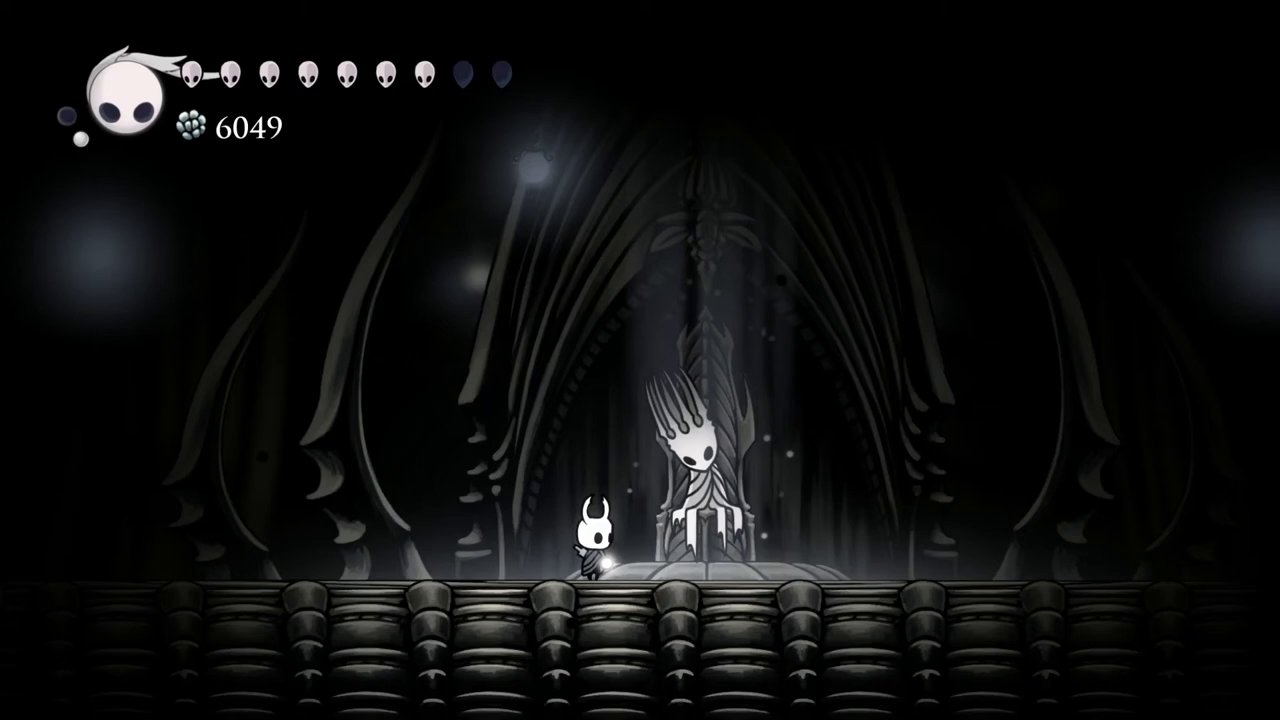 The body on the throne. Original game footage by Yoinksawse, 00:00. © Team Cherry. Image source ↗
A thought is not a deathbed confession
Using the dream nail on the body reveals the familiar thought “No cost too great.” The Korean game footage displays the corresponding line above the king. This is a response obtained from the body through the dream nail, not a conversation in which a living king explains his last act.
It is tempting to make the king himself the cost. That is a possible reading, but the sentence does not name the sacrifice, its recipient or the act that caused his death. Finding the words on a dead body does not supply the missing account of a suicide or a deliberate death to create a charm.
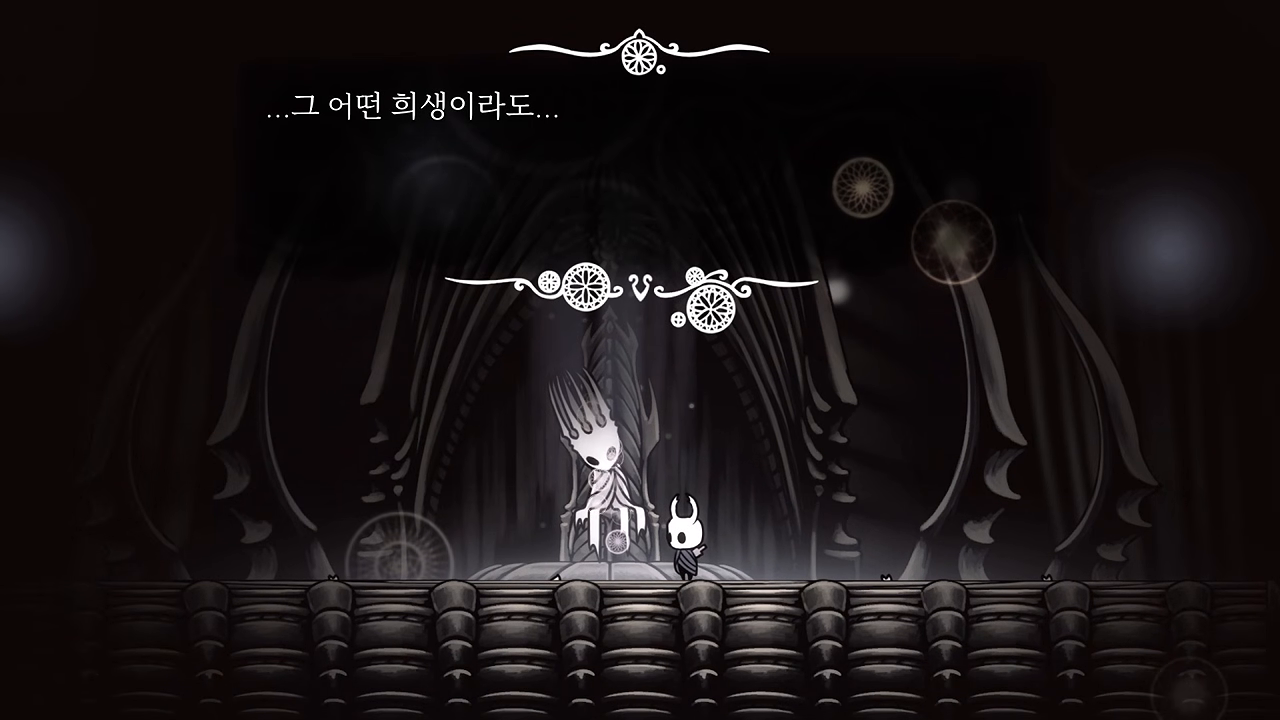 The thought read with the dream nail. Korean game footage by 뻔튜브, 19:05. © Team Cherry. Image source ↗
The Godseeker can feel his power without finding him alive
The Godseeker’s later encounter by a pale throne offers a useful check. She describes the afterglow of the power that once sat there. Even that lingering presence was enough to draw the Godseekers to Hallownest. Her account concerns the strength left by a long-departed ruler; it does not show him governing, speaking or acting now.
Reading her thought with the dream nail adds something more revealing than a claim of continued power on its own. She regards the king as completely erased, then asks: “How could it happen?” A character drawn to his enormous power still lacks an explanation for his disappearance. Neither the afterglow nor the erasure names a killer.
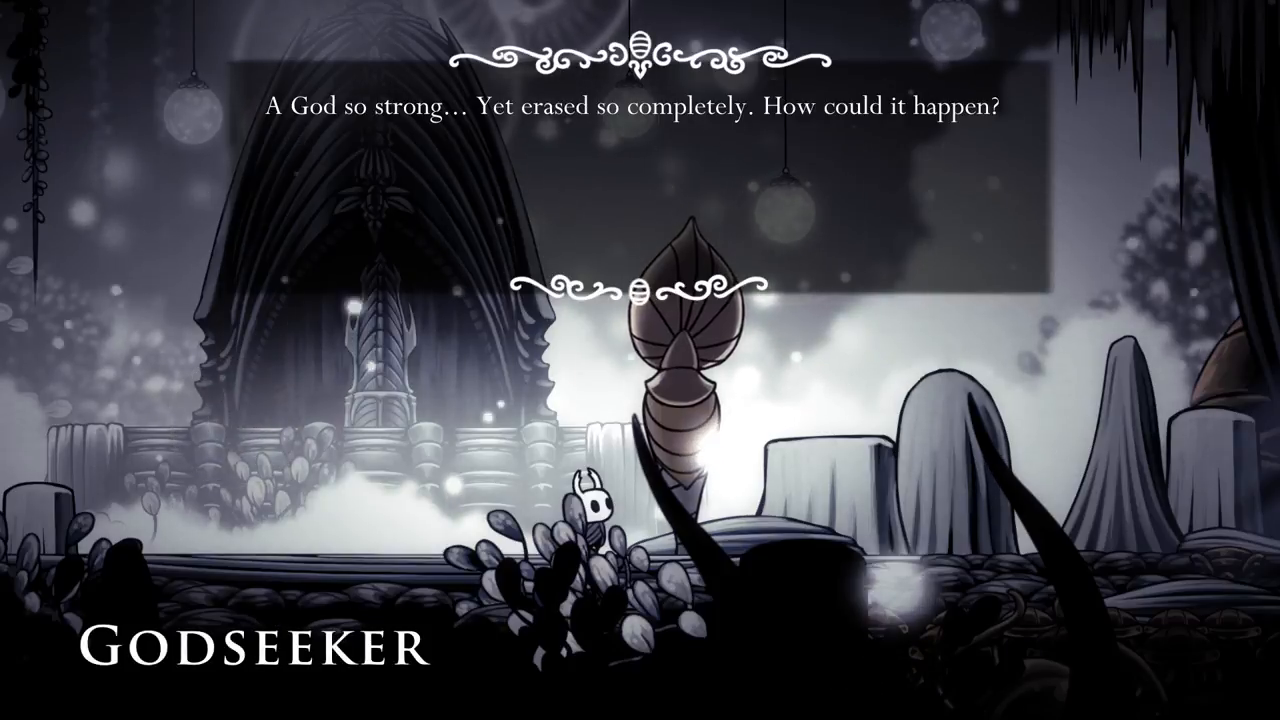 The Godseeker’s unanswered question. Original game footage by CrankyTemplar, 09:49.5. © Team Cherry. Image source ↗
Where the Void theory makes its extra step
The throne room is dark, with black particles moving through it. A Void reading connects that environment to the king’s end. More developed versions do more than match a colour: mossbag’s analysis, available in this Korean translation, considers particle behaviour, nearby fallen guards and possible routes into the palace. It also raises objections involving those routes and the traces left on the king. Those qualifications are already part of the theory’s history.
Even if the particles establish Void in the room, another connection is needed: when did it arrive, and what did it do to the king? Evidence for a presence is not yet an account of a death. The recorded throne encounter and the Godseeker’s question do not close that gap.
This leaves room to prefer the Void theory without presenting it as a disclosed cause. Explanations involving age, despair or self-sacrifice likewise need to be recognised as readings rather than a final report from the game. The short thought can shape how the king’s end feels; it cannot reconstruct every event that led to the body on the throne.
The king’s failed seal has a different evidence trail, involving a direct diagnosis and a hidden memory. Why the Hollow Knight failed to contain the infection follows that narrower question.
Original game sources and further reading
- Released game scenes: the throne encounter (00:00–00:08); the Korean thought-reading response (around 19:05); the Godseeker’s dialogue about the king (09:33–09:51). These are third-party recordings of game material. Commentary is separate from the game text; exact platforms, patches and modifications are not fully verified.
- Secondary comparison: Hollow Knight Wiki’s Pale King entry and the Korean translation of mossbag’s analysis. Their interpretations are not treated as an official cause of death. This reading concerns the original game and its Godmaster material, without importing sequel events.
Official sources
- Hollow Knight — original throne encounter ↗Yoinksawse, 00:00–00:08. Original game pixels delivered by a third-party recorder; no cause of death shown.
- Hollow Knight — Korean thought-reading scene ↗뻔튜브, around 19:05. Actual game text distinguished from commentary.
- Hollow Knight: Godmaster — Godseeker dialogue ↗CrankyTemplar, 09:33–09:51. Actual afterglow dialogue and subsequent thought-reading response. Exact platform/build/modifications unknown for all recordings.
Further reading
- Korean translation of mossbag’s theory analysis ↗Secondary interpretation, including developed Void evidence and objections. Not an official death report.