Why did the Hollow Knight fail to contain the infection?
Scope: Original Hollow Knight dialogue, the Vessels’ origin memory and the hidden palace memory. Sequel revelations are outside this reading.
Spoilers Discusses the failed seal and hidden late-game memories.
The Hollow Knight was chosen to contain the infection, yet the infection returned. The White Lady gives the closest thing to a direct diagnosis: the chosen Vessel had been compromised by a thought. Being appointed the Hollow Knight did not prove that the Vessel was truly hollow.
The familiar explanation is that the Vessel loved the king. A hidden memory gives that reading considerable weight. But the memory and the White Lady's dialogue do different jobs, and neither identifies that emotion outright.
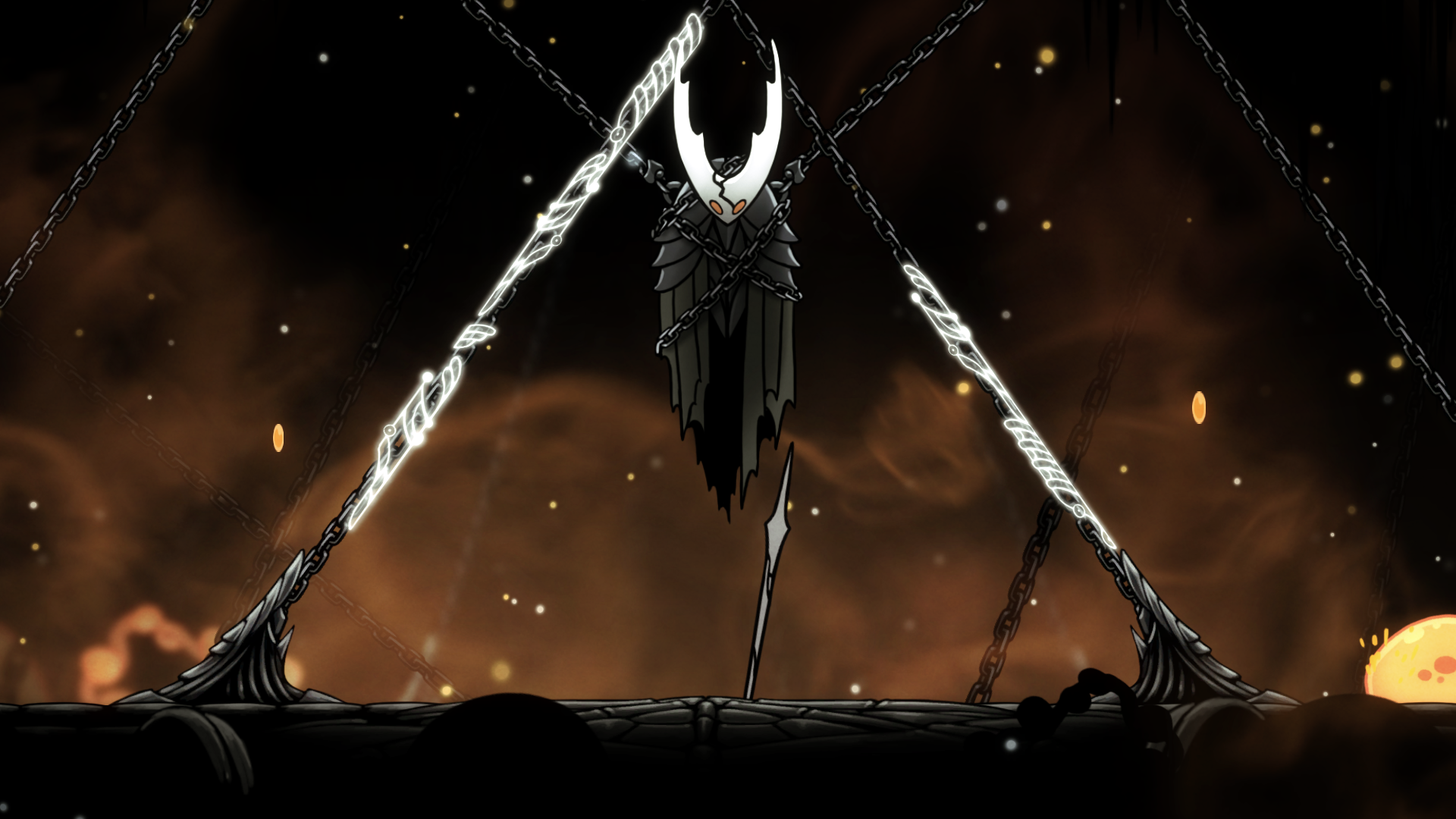 The Hollow Knight, entrusted with the seal. Game image: © Team Cherry. Posted by Hollow Knight Wiki. Image source ↗

A fighter could be strong and still be the wrong Vessel
The memory of the Vessels' origin sets out requirements that go beyond endurance. A mind capable of thought and a will capable of breaking are precisely what the intended Vessel is supposed to lack. The sequence ends by assigning the task of sealing the light that haunts dreams and naming the chosen being the Hollow Knight.
That makes the title an expression of the plan. It is not a separate test result proving that the plan worked. A powerful body could carry out its assigned role for a time while failing the condition on which lasting containment depended.
When the White Lady asks the player to replace the Vessel, she says its apparent strength was misjudged. She then calls it tarnished by “an idea instilled.” Her explanation points to a flaw in the chosen Vessel, rather than merely to an opponent who eventually became too strong.
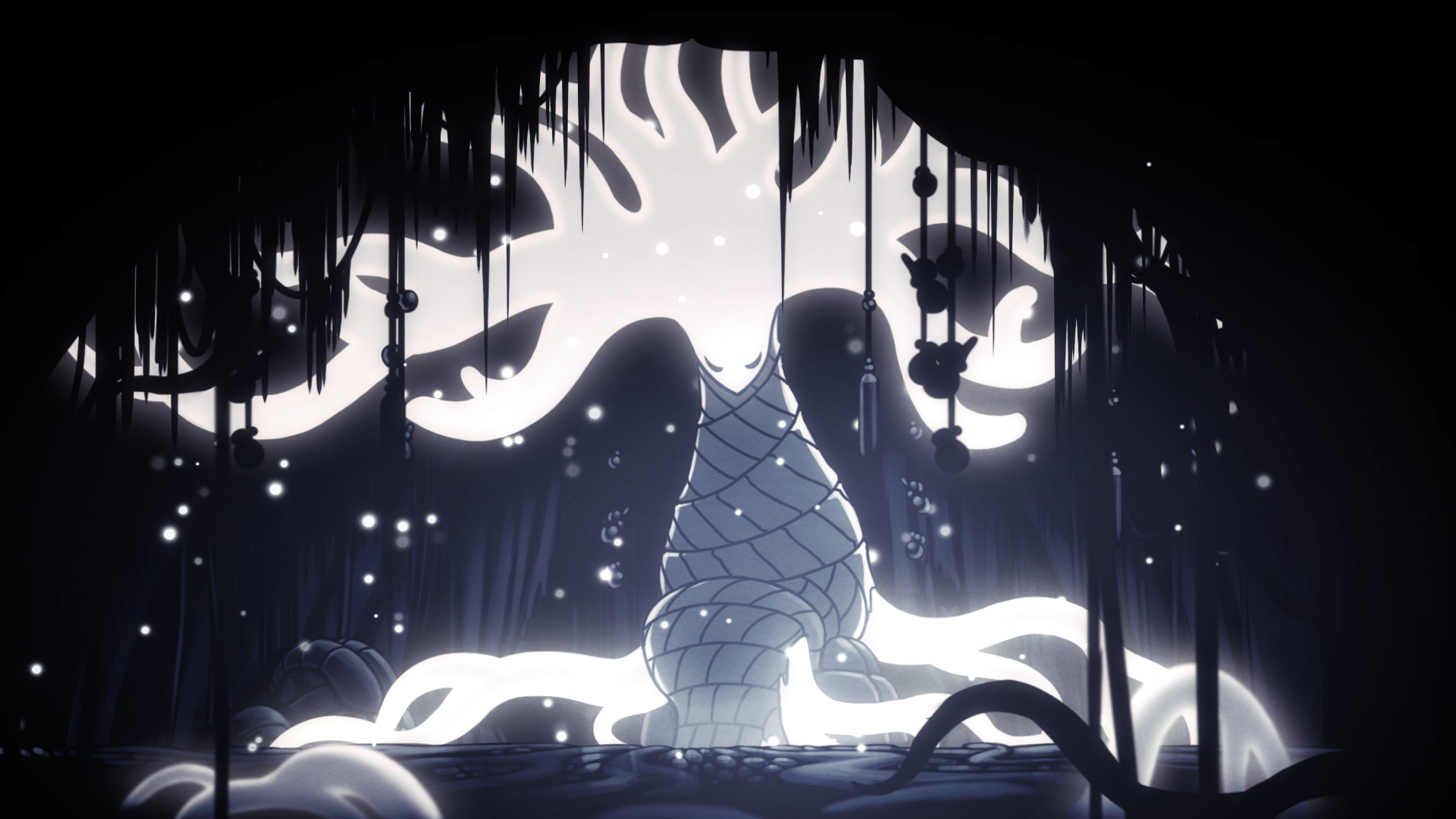 The White Lady, who asks for the Vessel to be replaced. Game image: © Team Cherry. Posted by Hollow Knight Wiki. Image source ↗

There is an important limit to that testimony. She does not name the idea, identify its first moment, or describe how someone put it there. Even if we accept her diagnosis, we still need another basis for saying what the Vessel came to think or feel.
What the memory adds
The hidden palace memory places the young Hollow Knight beside the king. The little Vessel looks up; the king turns towards it. There is no command to carry out and no enemy to defeat. The game gives this quiet exchange its own hidden scene.
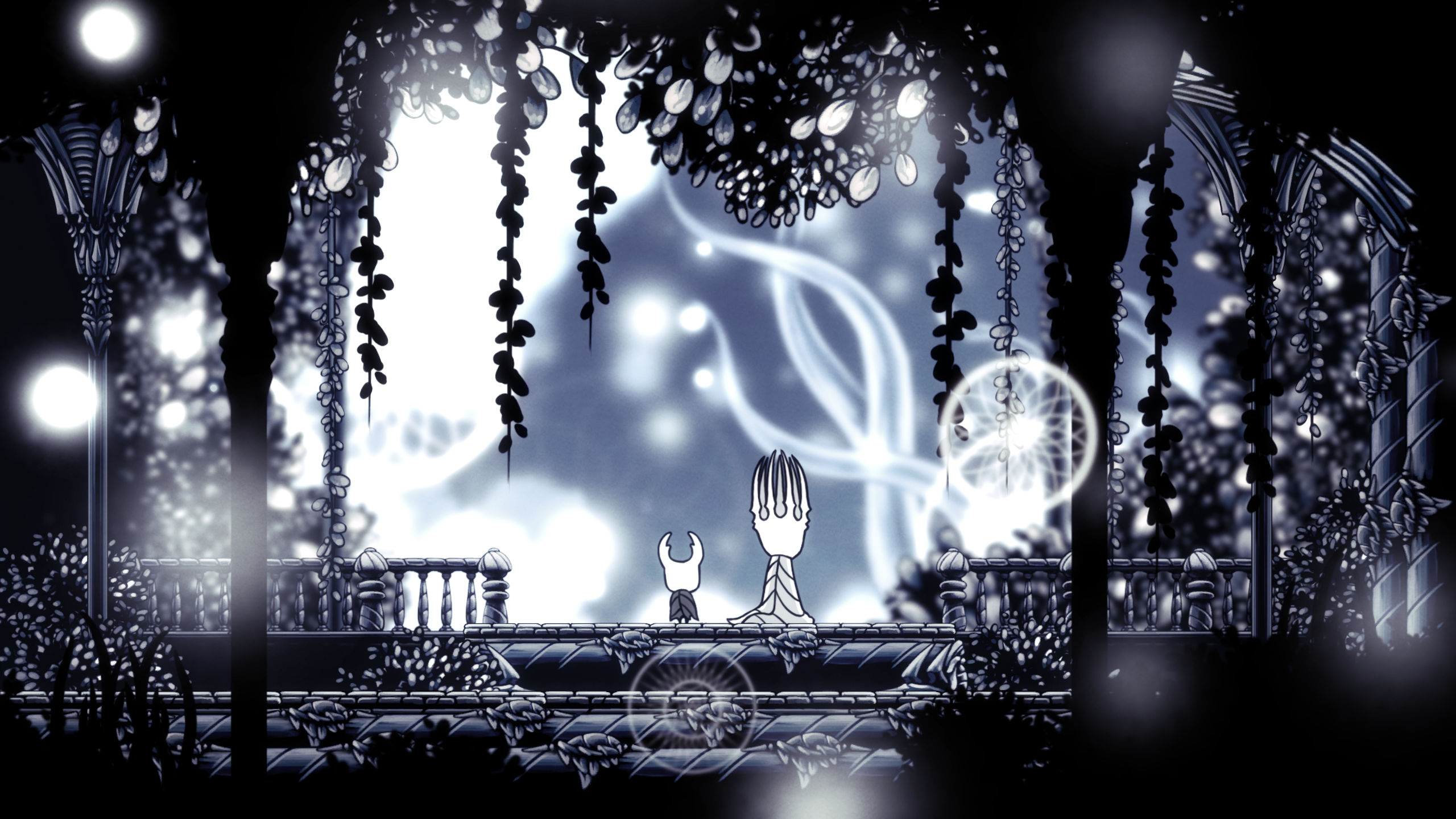 A moment from the memory of the king and the young Hollow Knight. © Team Cherry. Posted by Hollow Knight Wiki. Image source ↗

Read alongside the White Lady's diagnosis, the exchange suggests a personal bond where the plan required emptiness. The Vessel may have come to regard the king as someone special, rather than simply as the source of its instructions. Affection is a persuasive interpretation of that relationship.
But a glance cannot tell us everything inside a mind. Wanting approval, attachment and a sense of purpose are not interchangeable, and the scene does not choose a label for us. Nor does it announce that this was the instant the Vessel first became capable of thought. Finding a memory late in the game is not evidence that it records the beginning of the flaw.
This uncertainty does not make the scene irrelevant. It changes how confidently we should use it. The dialogue supplies a diagnosis; the memory offers a relationship through which to understand it. Together they support a reading of the failed Vessel that a simple comparison of fighting strength would miss.
The tragedy is that a quality we might admire in another knight could undermine this particular task. If the chosen Vessel wanted to answer the king's hopes, that desire would matter precisely because the plan demanded an absence of such an inner life. The original game leaves room to interpret that desire. It gives much less reason to treat the name Hollow Knight as proof that there was nothing inside to begin with.
Further reading
- White Lady dialogue — game recording by Relyea ↗3:57–4:14. Released game dialogue distributed by a third party.
- Memory of the Vessels’ origin — game recording by nart ↗0:22 mind requirement; around0:38 will requirement.
- The king and the Vessel — game recording by Brian ↗Approach from6:54; heads turn around7:06–7:08.
- Korean game dialogue and origin memory — recording by 뻔튜브 ↗White Lady dialogue around17:40; final lines of the origin memory at23:00–23:13.