Why isn’t Hornet a Void being if she is related to the Knight?
Scope: Released dialogue and the Birthplace memory from the original Hollow Knight. Later-game lore is outside scope.
Spoilers Spoilers for Hornet’s parentage and her late-game Abyss dialogue.
Hornet and the Knight are related through the Pale King. Does that make Hornet a Void-made Vessel too? The original game says no. They share one side of a lineage, but not the process that made the Knight a Vessel. Hornet also says that she does not share the Knight’s “crucial emptiness.”
This does not claim that Hornet can never come into contact with Void. It separates three different things: kinship, birth, and what a being is made from.
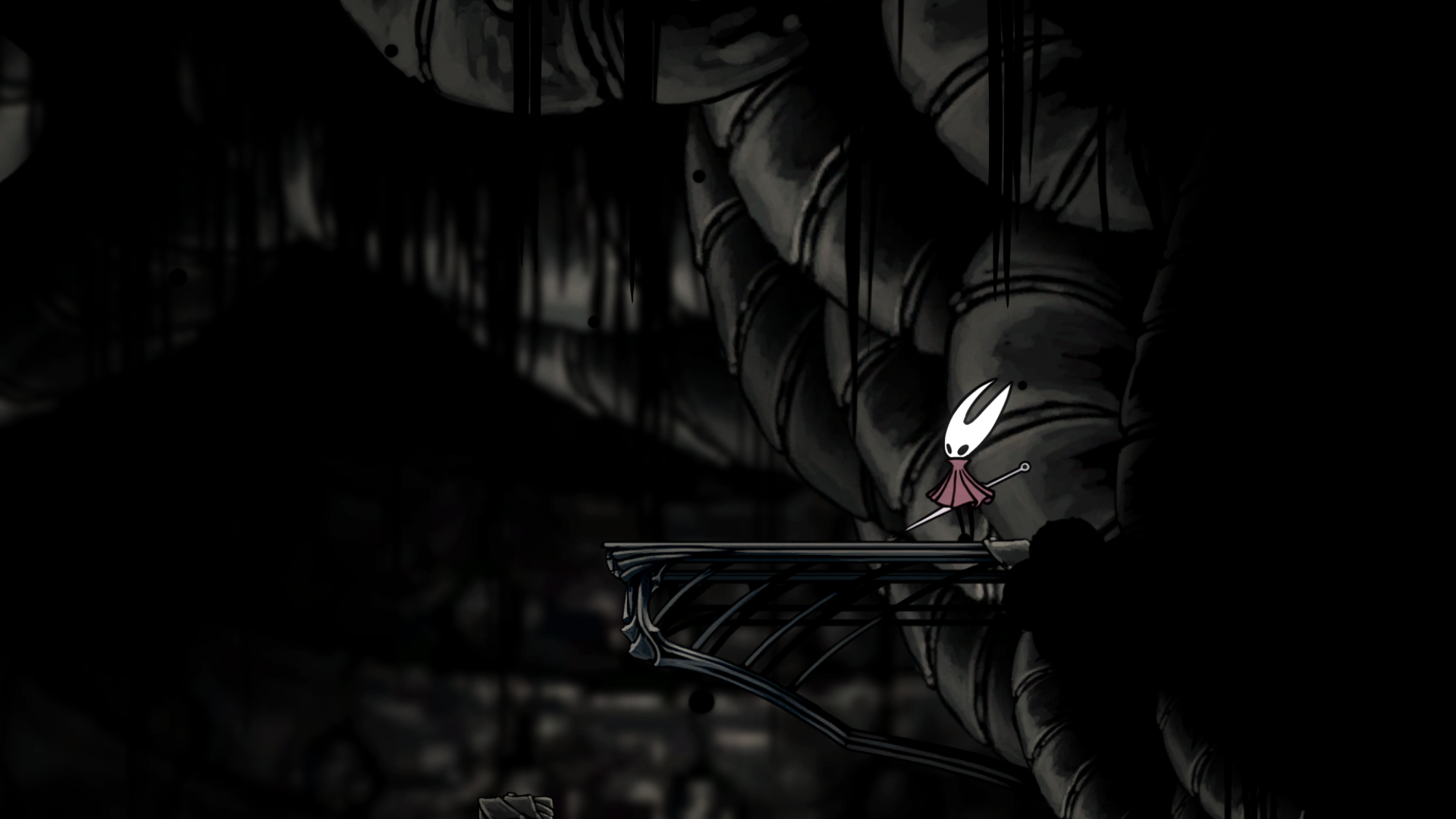 At the Abyss, Hornet directly distinguishes the Knight’s emptiness from herself. Game image © Team Cherry; distributed by Hollow Knight Wiki. Image source ↗

One father, two origins
The Knight’s birthplace is the Abyss. The Birthplace memory presents the words “Born of God and Void” as part of the Pale King’s requirements for a Vessel. Kingsoul likewise represents the union of two higher beings and opens the way to that birthplace. Divine parentage and a birth involving Void are both parts of the Vessel’s origin.
Hornet receives a different origin story. In the released game text, the White Lady describes the Pale King’s union with another being as a bargain and Hornet as the creature born from it. That other parent is Herrah the Beast. Midwife calls Hornet a pale gift to the Nest and the Beast, a fair exchange for the sacrifice Herrah made by becoming a Dreamer.
Both children are connected to the Pale King, but the next step differs. The Knight belongs to a line of Vessels born from divine parents and Void. Hornet is the daughter produced by the bargain between the King and Herrah. A shared parent establishes kinship; it does not reproduce the Abyss and Void portion of the Knight’s creation.
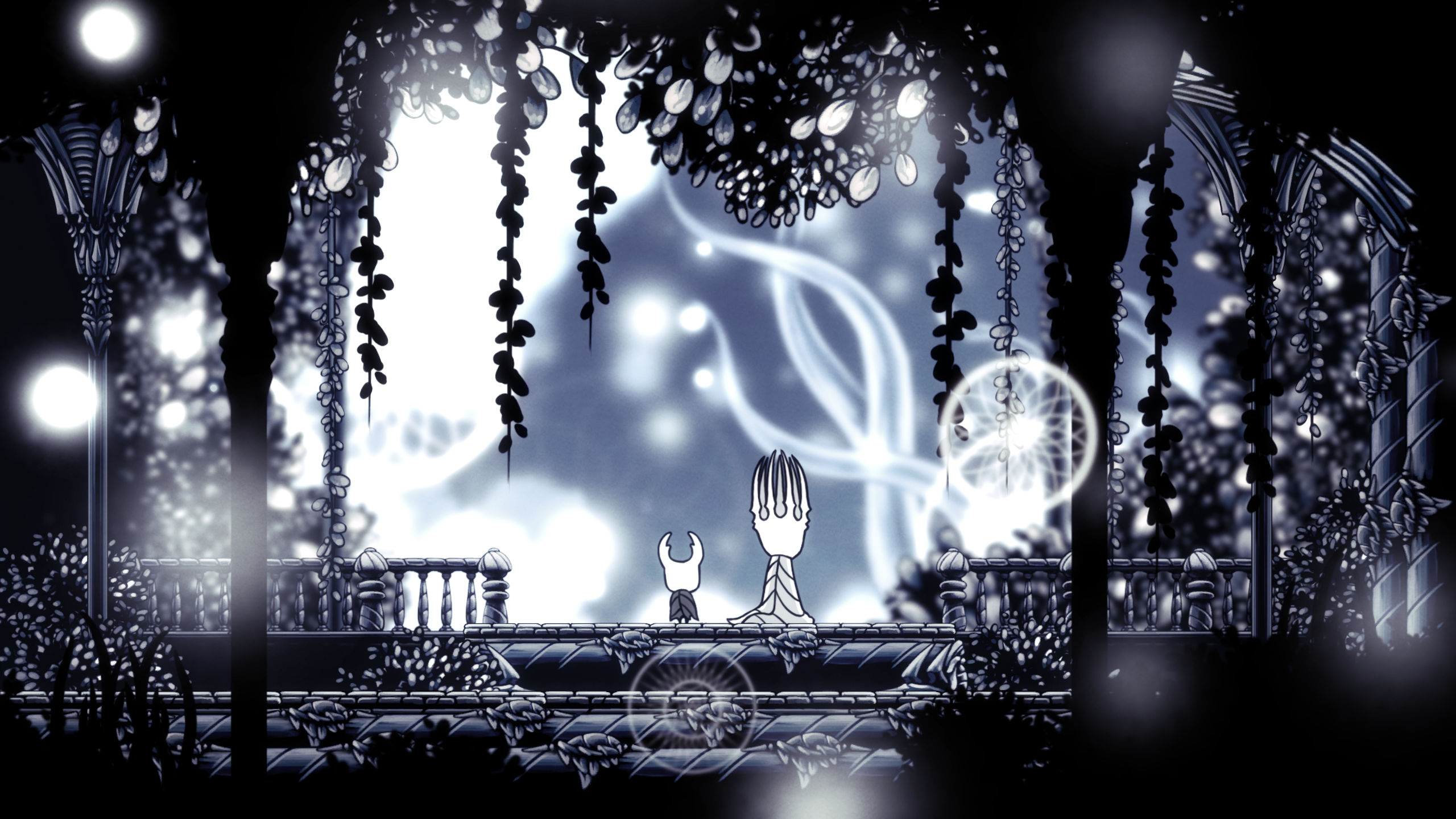 A memory of the King with the chosen Vessel. It depicts the Vessel’s upbringing rather than establishing Hornet’s composition. © Team Cherry; distributed by Hollow Knight Wiki. Image source ↗

Hornet states the difference herself
The strongest evidence is Hornet’s own distinction. After the Knight acquires Shade Cloak and returns to the upper Abyss, Hornet calls it the place of the Knight’s birth. She then says that their strength comes from a similar source, but that she does not share the Knight’s “crucial emptiness.”
The scene’s context matters. Immediately before that line, Hornet says the Knight has faced its birthplace and draped itself in the substance of that place’s shadow. “Emptiness” is therefore difficult to reduce to a quiet personality or lack of expression. The official Korean text makes the boundary even more explicit by rendering the phrase as “that core, that Void.”
The line does not name exactly what its “similar source” means. The shared Pale King, a broader divine lineage, or another common source of power remain possible readings. None reverses the second half of the sentence: Hornet does not identify the Knight’s Void-related emptiness as something she shares.
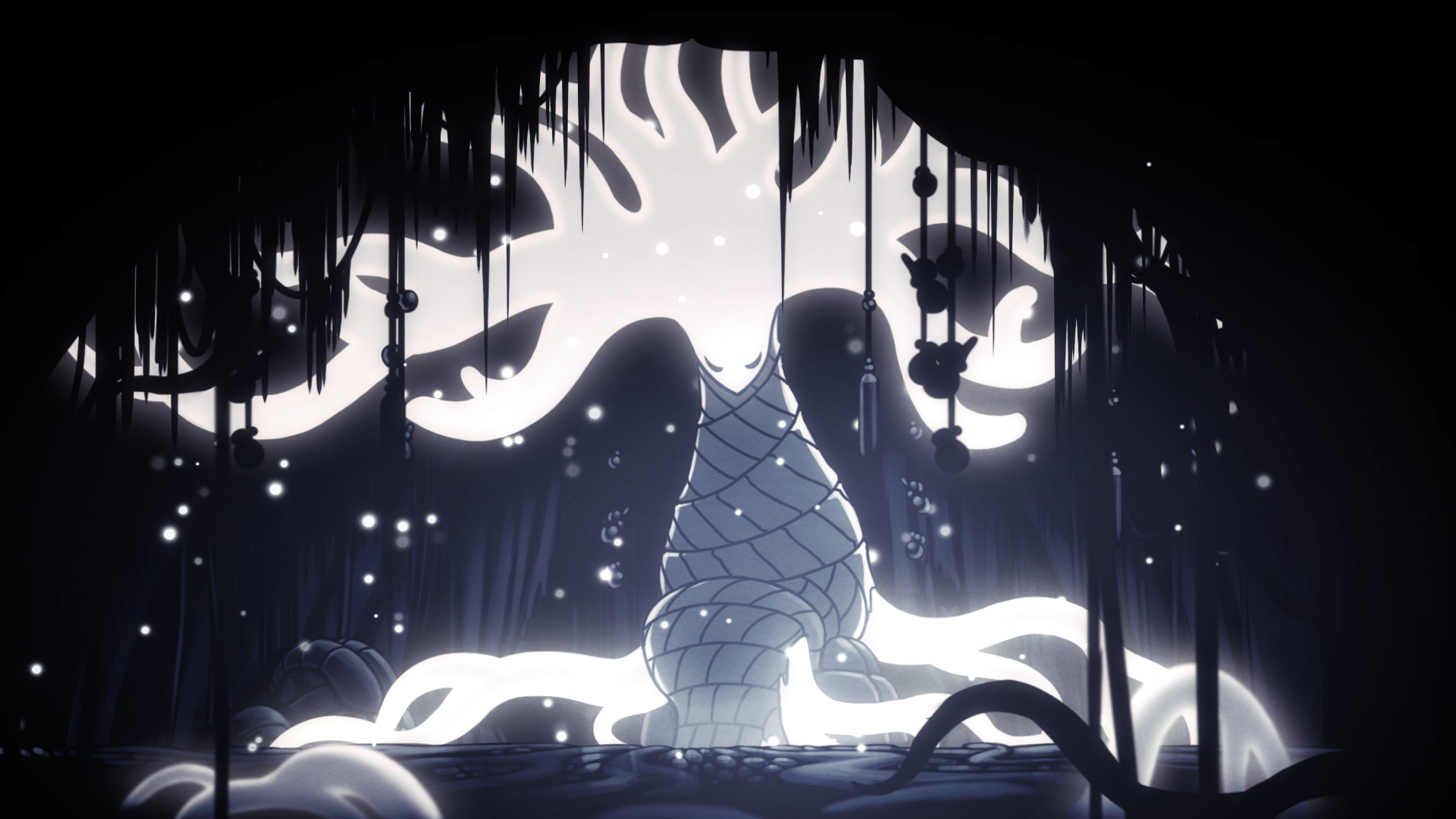 The White Lady describes the origins of the Vessels and Hornet in different terms. Game image © Team Cherry; distributed by Hollow Knight Wiki. Image source ↗

“Gendered Child” is supporting evidence
The White Lady and Midwife call Hornet the “Gendered Child.” The phrase has prompted a long-running player question, and it works as a compact contrast between Hornet and the Vessels.
A Vessel was supposed to be an empty shell without mind or will. Hornet has a name and gender, resembles her mother in mind and body, and acts through her own judgments and aims. The title therefore reinforces that she was not another candidate Vessel.
Gender alone, however, is not a chemical test for Void. The evidentiary order runs the other way: Hornet has a different birth account and directly denies sharing the Knight’s emptiness; “Gendered Child” supports that distinction. Reversing the order would turn a fan rule into stronger evidence than the game’s own dialogue.
Resemblance is not identity
Hornet’s dark body, pale mask-like face, and relation to the Knight make the two look connected. Visual resemblance does not establish their material composition. The original game acknowledges what they share while letting Hornet mark the point where the similarity ends.
This article is limited to dialogue from the released original Hollow Knight. If a later story depicts Hornet contacting or being affected by Void, contact would still be different from having been born as a Void-composed Vessel. A later encounter would not automatically rewrite this origin account.
Hornet is therefore not an unexplained exception among siblings. The Knight is both a child of pale beings and a Vessel born with Void; Hornet is the daughter born from the Pale King’s bargain with Herrah. They share part of a lineage, not the rest of their making.
Further reading
- Released multilingual TextAsset archive ↗HORNET_ABYSS_ASCENT_01, SPIDER_GREET2, QUEEN_HORNET, KING_ABYSS_05 and CHARM_DESC_36_B. Third-party extraction of released strings, not a new translation.
- Arqade — Why is she referred to as Gendered Child? ↗Player question and answers, used for demand and existing-answer comparison rather than canon evidence.
- Hornet dialogue and Birthplace memory context ↗Third-party event index: upper Abyss dialogue after Shade Cloak. Birthplace memory cross-checked with the linked footage and Pale King dialogue index.