ELDEN RING: Why is Godwyn’s body still alive?
Scope: Released base-game item records and body views. Exact capture patches/platforms unknown. Expansion and ending conclusions, growth-rate measurement and a universal theory of death are outside this article’s scope.
Spoilers Reveals Godwyn’s condition, Ranni’s bodily death and the origin of Deathroot in the base game.
Godwyn's soul died; his body did not complete the same death. That is the essential distinction behind the enormous, corrupted remains called the Prince of Death. A surviving body does not mean that Godwyn's soul survived, or that the person he used to be has returned.
The difficulty is that the game can describe him as dead while showing a body whose consequences are still spreading. “Corpse” and “living body” sound incompatible until we ask which part of his death each description concerns.
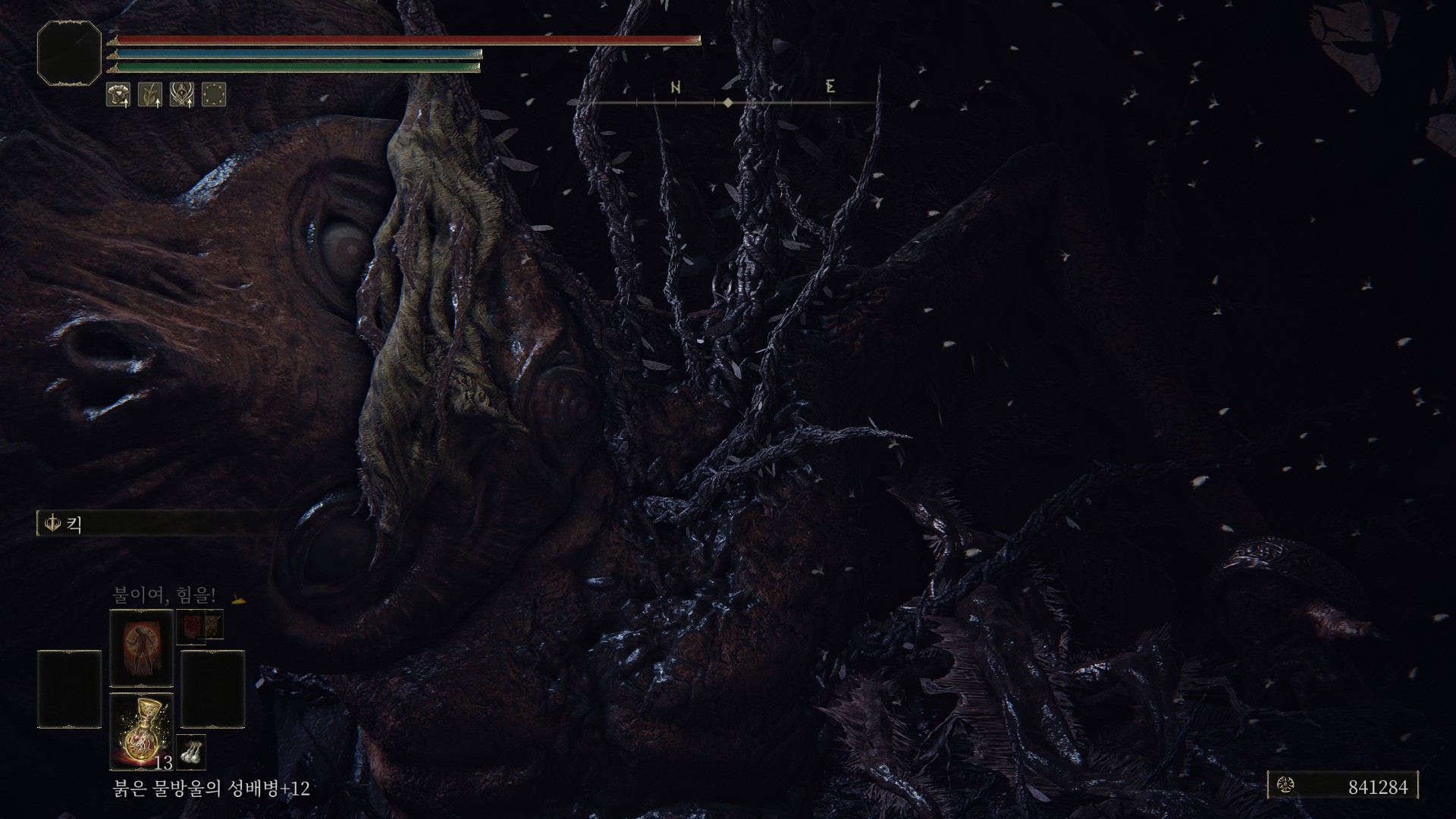 Godwyn’s face among the roots. Original game screen shared by mad wand. © Bandai Namco Entertainment / FromSoftware. Image source ↗
Ranni’s discarded body supplies the missing distinction
The Cursemark of Death description ties two deaths together. The mark should have formed a complete circle at the first demigod death. Instead, that first death involved two demigods, leaving two broken halves. Ranni died in flesh; the Prince of Death died in soul.
This is why treating the murder as an ordinary death leads in the wrong direction. Godwyn did not lose his body while a free soul carried on elsewhere. The division runs the other way. Ranni’s discarded flesh bears an item that explains what happened to him as well as to her.
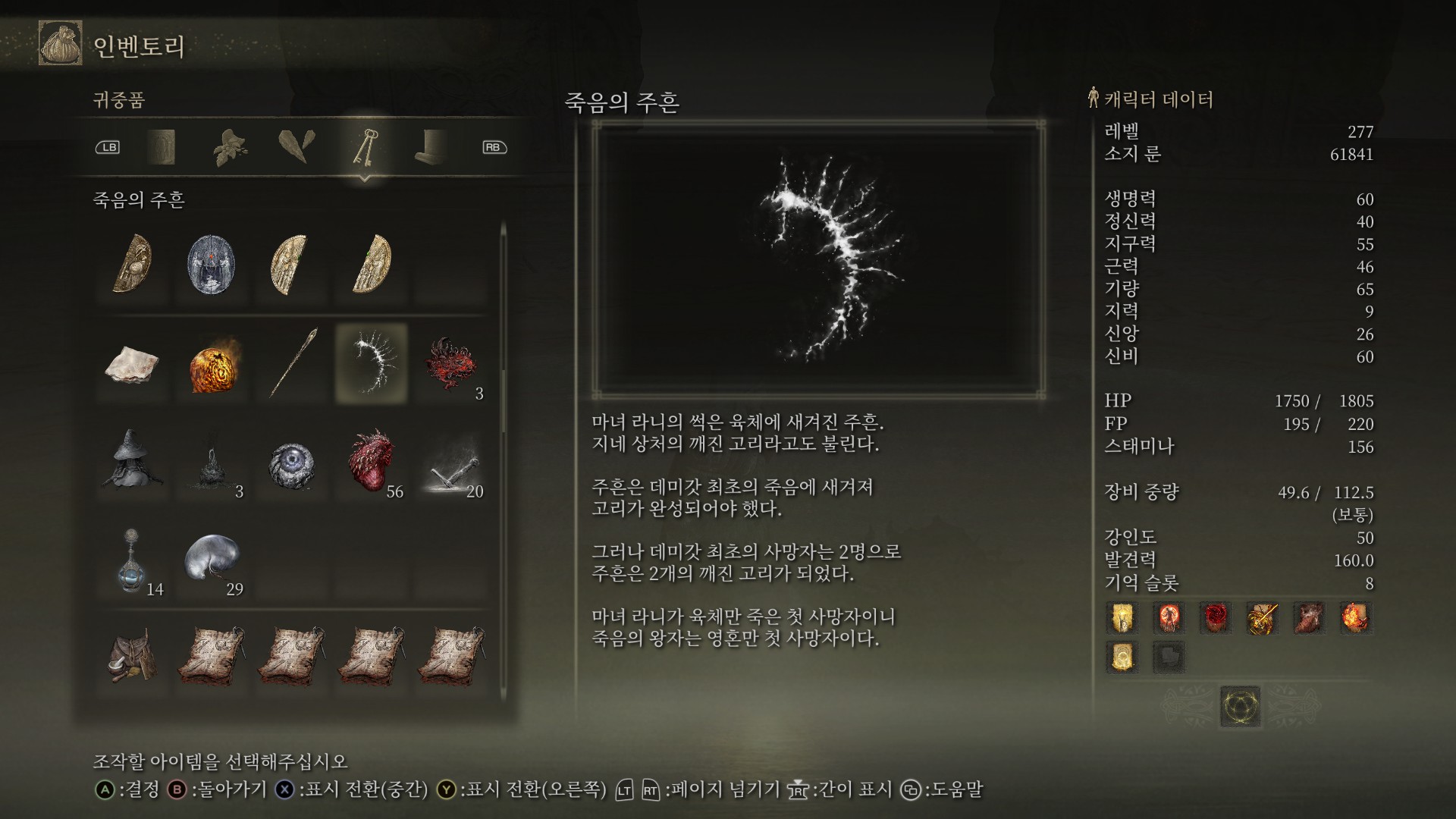 The item distinguishes what died in each demigod; the distinction is explained in the prose. Korean game screen shared by mad wand. © Bandai Namco Entertainment / FromSoftware. Image source ↗
Another talisman description identifies the Prince of Death as the figure once called Godwyn and reports his burial deep beneath the capital, at the Erdtree’s roots. The Prince of Death's Cyst describes a corrupted face belonging to someone unable to die a true death. These are not descriptions of a restored, healthy demigod.
Calling the remains a corpse does not undo the Cursemark’s distinction. The game is describing a death that has failed to become complete. The Prince of Death is Godwyn in that condition, rather than a second, revived soul occupying a separate form.
Deathroot explains the spread, not every detail of his anatomy
Deathroot’s item description shifts the scale from one burial to the surrounding world. It identifies Deathroot as a source of the undead. After the first demigod death, the stolen Rune of Death spread through underground roots and sprouted across the Lands Between as Deathroot.
Notice what the description says spread: the Rune of Death. Read beside the account of Godwyn’s burial, it connects his condition to death moving through the root network. It does not give us an anatomical map proving that every distant root or similar face is one continuous piece of his flesh.
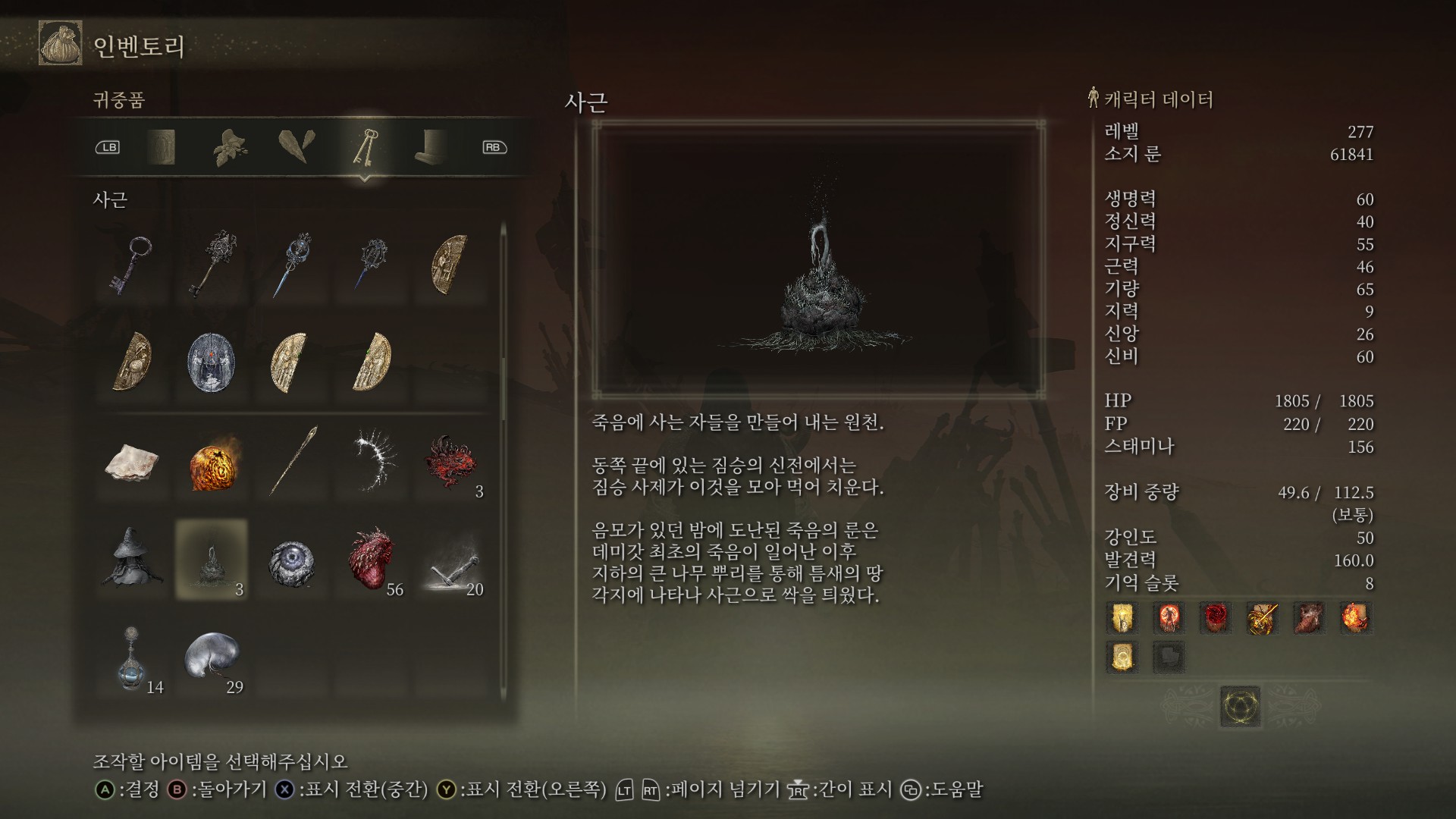 Deathroot’s description names the route of the spread. Korean game screen shared by mad wand. © Bandai Namco Entertainment / FromSoftware. Image source ↗
“His body keeps growing” is therefore a useful shorthand only if we keep its parts separate. There is a huge, transformed body, and there is a spreading influence associated with his death. The inspected records do not measure a growth rate or describe a precise biological process that turns one into the other.
What the surviving body cannot settle
The same limit applies to his fishlike shape. Knowing why a body remains does not automatically explain why it developed those particular features. Visual resemblance can suggest interpretations; it does not make one of them an explicit cause supplied by these items.
Nor does the body establish that Godwyn still thinks, chooses or directs the spreading death. His soul’s death is the starting fact. The records considered here do not restore his former personality, and they are too narrow to settle every possible question about awareness or response.
What persists beneath the capital is the consequence of an incomplete death. Its reach extends well beyond the burial, without giving us a returned Godwyn to speak for it. His death’s role in the queen’s later actions is a separate question, explored in why Marika shattered the Elden Ring.
Official sources
- Original Korean game records — captures shared by mad wand ↗Original inventory screens: Cursemark of Death, burial/face talismans, Deathroot and the region map; body views below. The host’s surrounding theories are separate from the game text.
- Original English Deathroot inventory — PanyapiN Gaming ↗00:27 shows the original item name and short effect. It does not display the full lore paragraph.
- English item-description panel — original game text inset in a guide ↗01:44 visible game-description panel, composited by the recorder over other gameplay. Used for spelling/cross-check, not as dialogue from the background scene.
Further reading
- Eldenpedia — Godwyn the Golden ↗An existing fan account already explains split death, bodily persistence and Deathroot. Context and source leads, not a replacement for the original records.